Case Study
Scenes in Light at Mimi & Olia
A day-night cinematic hospitality narrative from Ste Marie Studio & VISO.
A cinematic sequence of venues Olia, and Mimi conceived as a continuous spatial narrative unfolding across the day. From morning café to late-night lounge, each venue responds to shifts in time, tempo, and social behavior, transforming an urban corner into a rich environment that merges public hospitality with residential life.
Ste Marie translated the vision of Chef Daniel Costa, founder of the Corso 32 Group, by drawing upon design sensibilities deeply rooted in his Italian heritage and personal archives. The design concept for Olia & Mimi offers distinct atmospheres linked by a shared spirit of ease, pleasure, and ritual. Each space is programmed for different times of day and types of interaction, from evening dining to late-night lounging. Designed for both public life and resident intimacy, the venues connect via private and street-facing entries, turning the ground floor into a cultural and social threshold an everyday extension of home, and a neighborhood destination in its own right.


Design Intent :
Ste Marie designed a sequence of hospitality venues that unfold like scenes in a day-long film. It is hospitality imagined as part of everyday life—fluid, cinematic and quietly integrated into the fabric of the city.
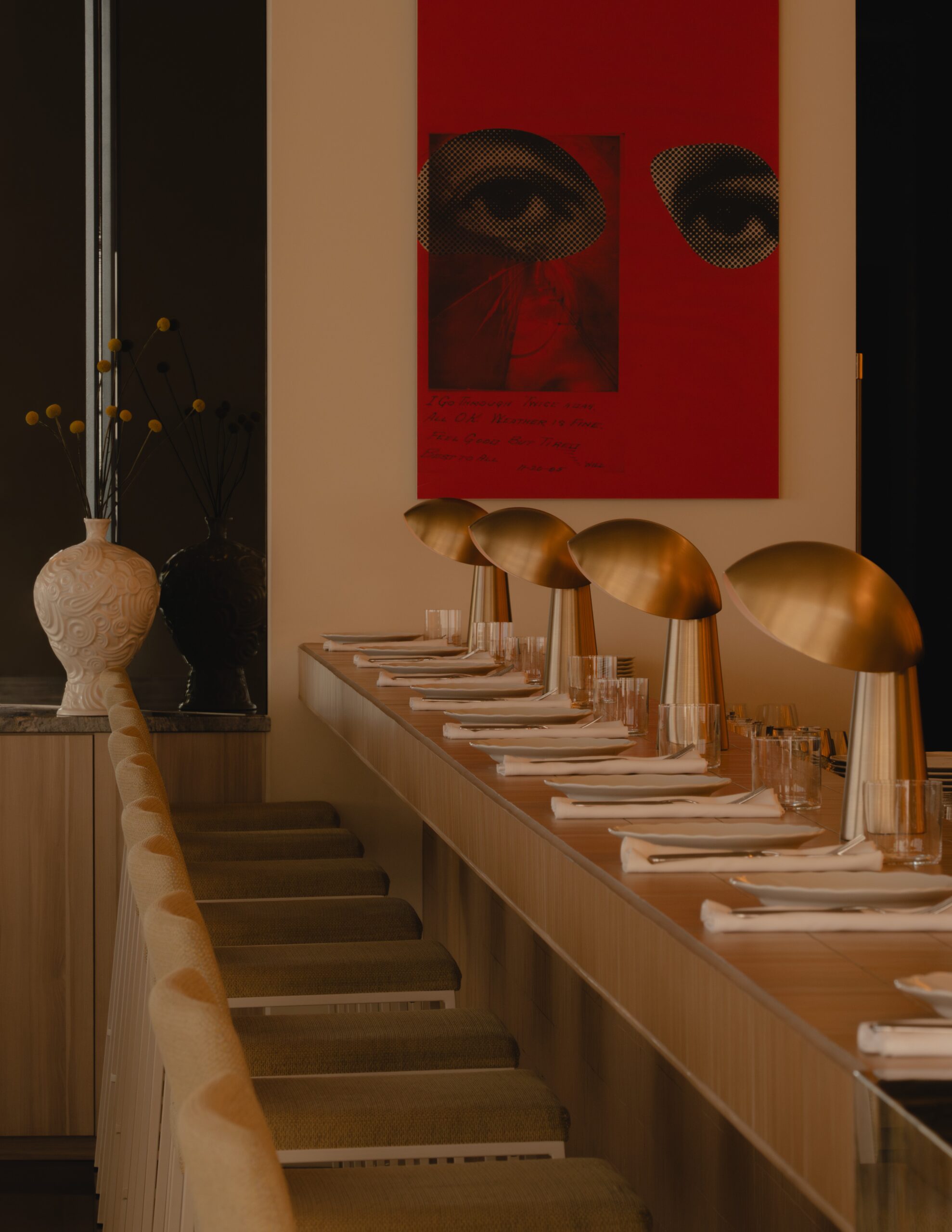
Olia :
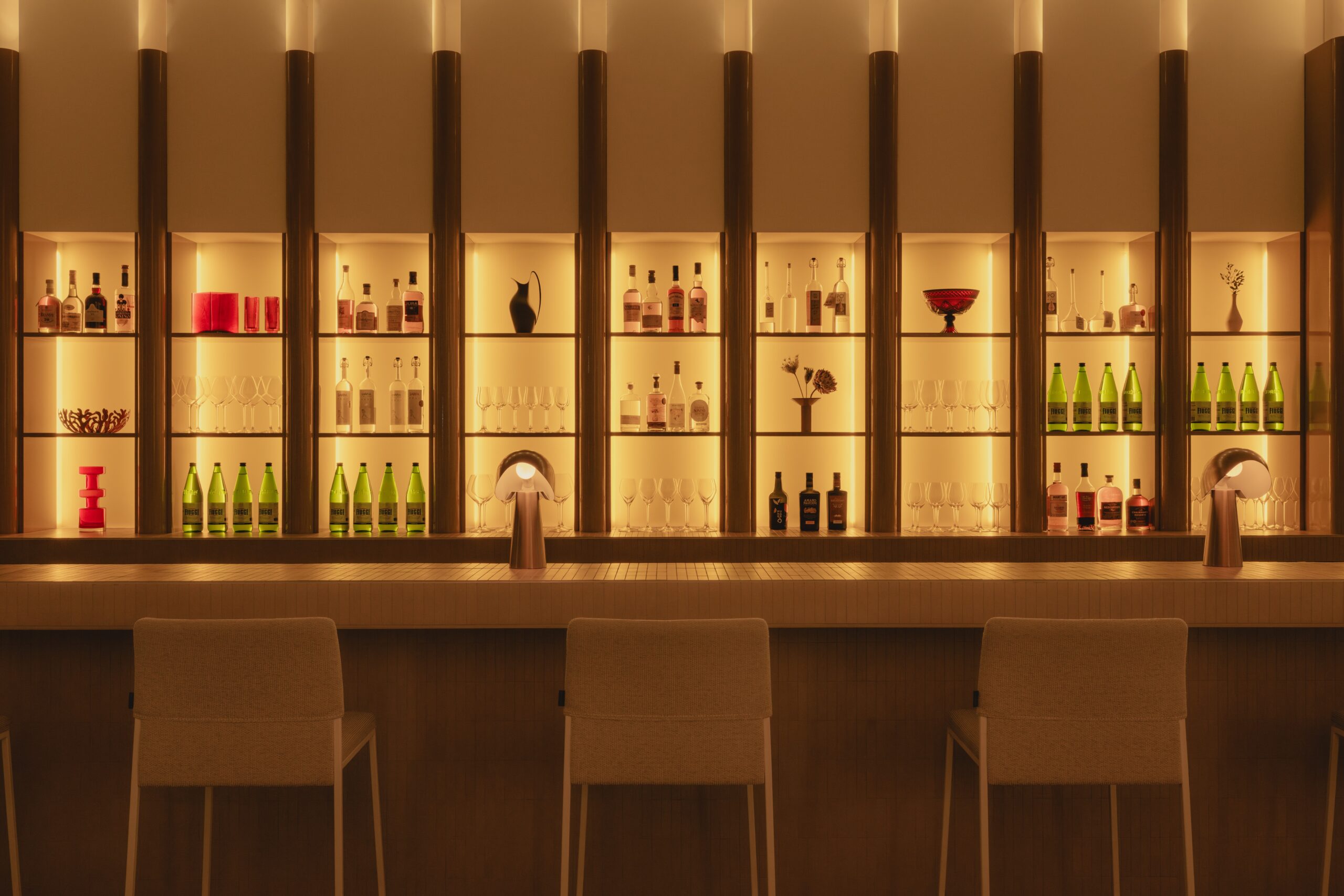
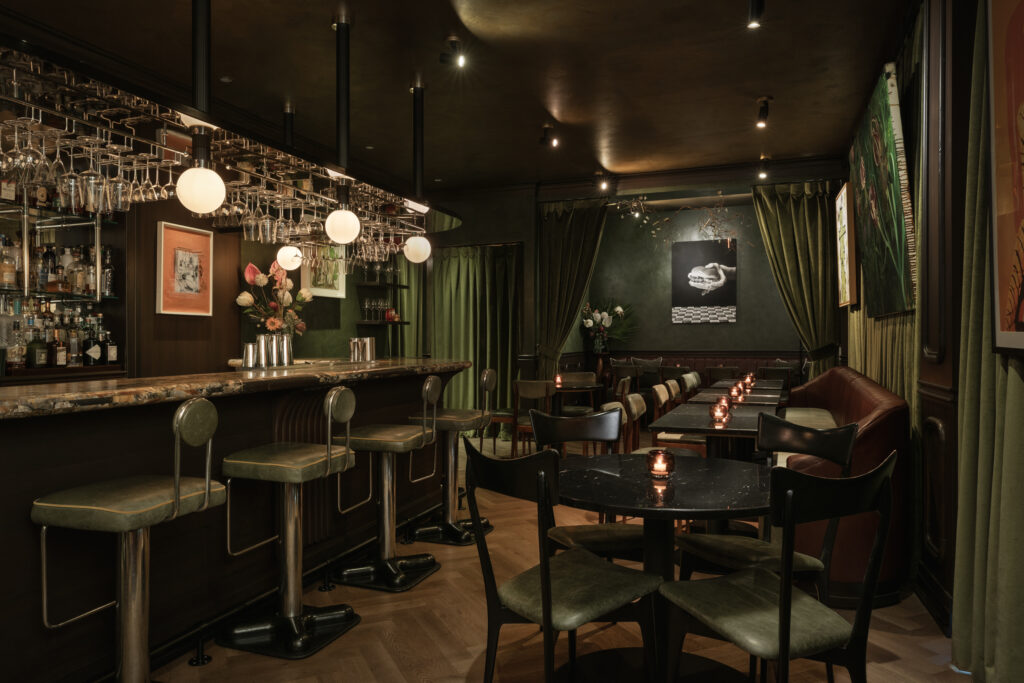
Olia is ultimately a classic dining room that’s never quite allowed to be entirely too nice or too classic. It is a space where time unfolds easily beneath the butter-soft glow of a canopy of custom linen lamps. An achromatic, warm palette establishes a canvas for the colors on the plate, while fragments of feature materials stand apart. The space is composed of custom Portuguese walnut tables and supple ecru leather benches, polished creamy marble, and high-gloss tawny-toned lacquered cabinetry around a glowing backlit fluted glass bar. Ambient light shifts, from daylight filtered through sheer drapery to a soft, buttery yellow ambient glow.
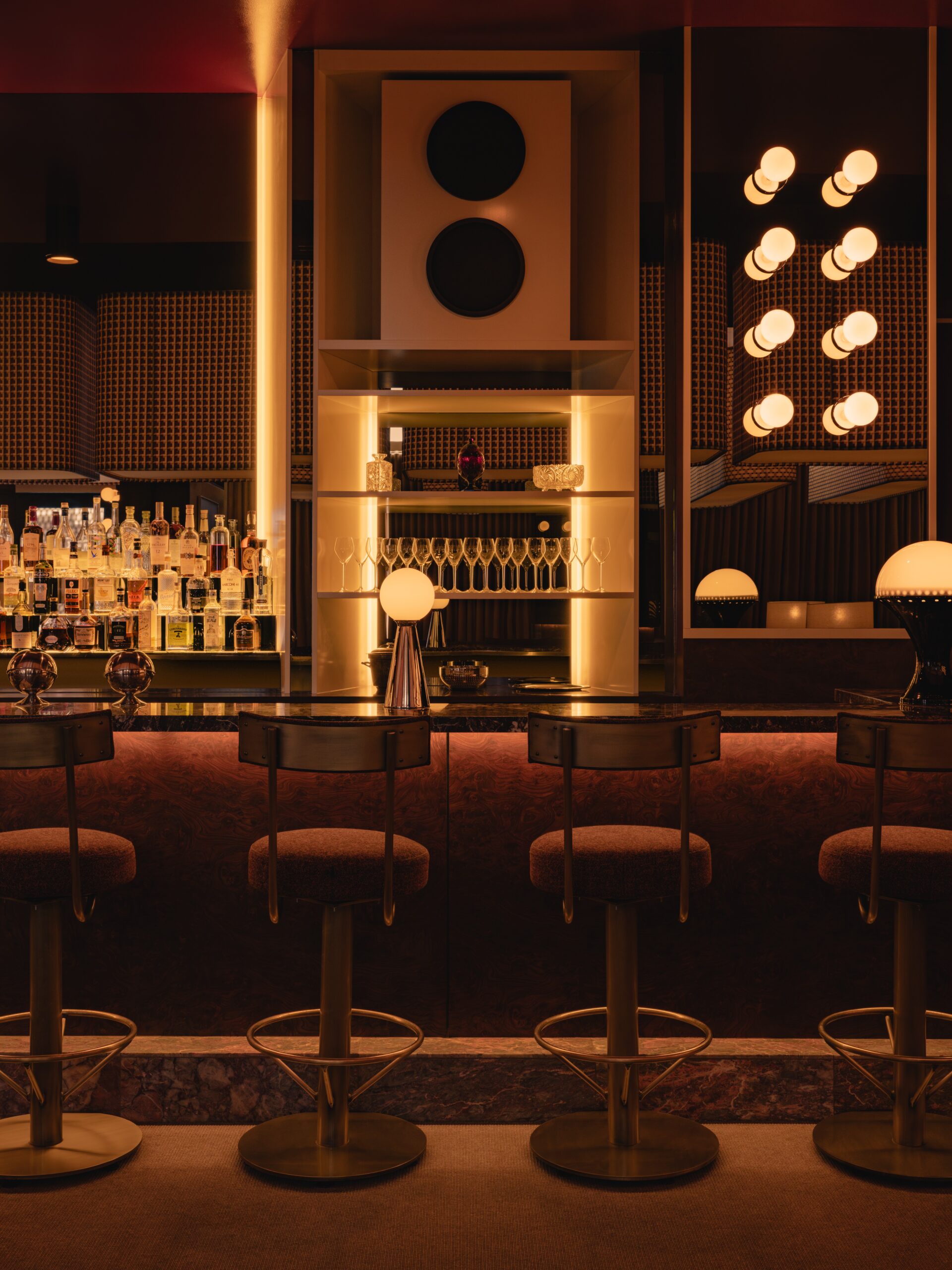
Mimi :
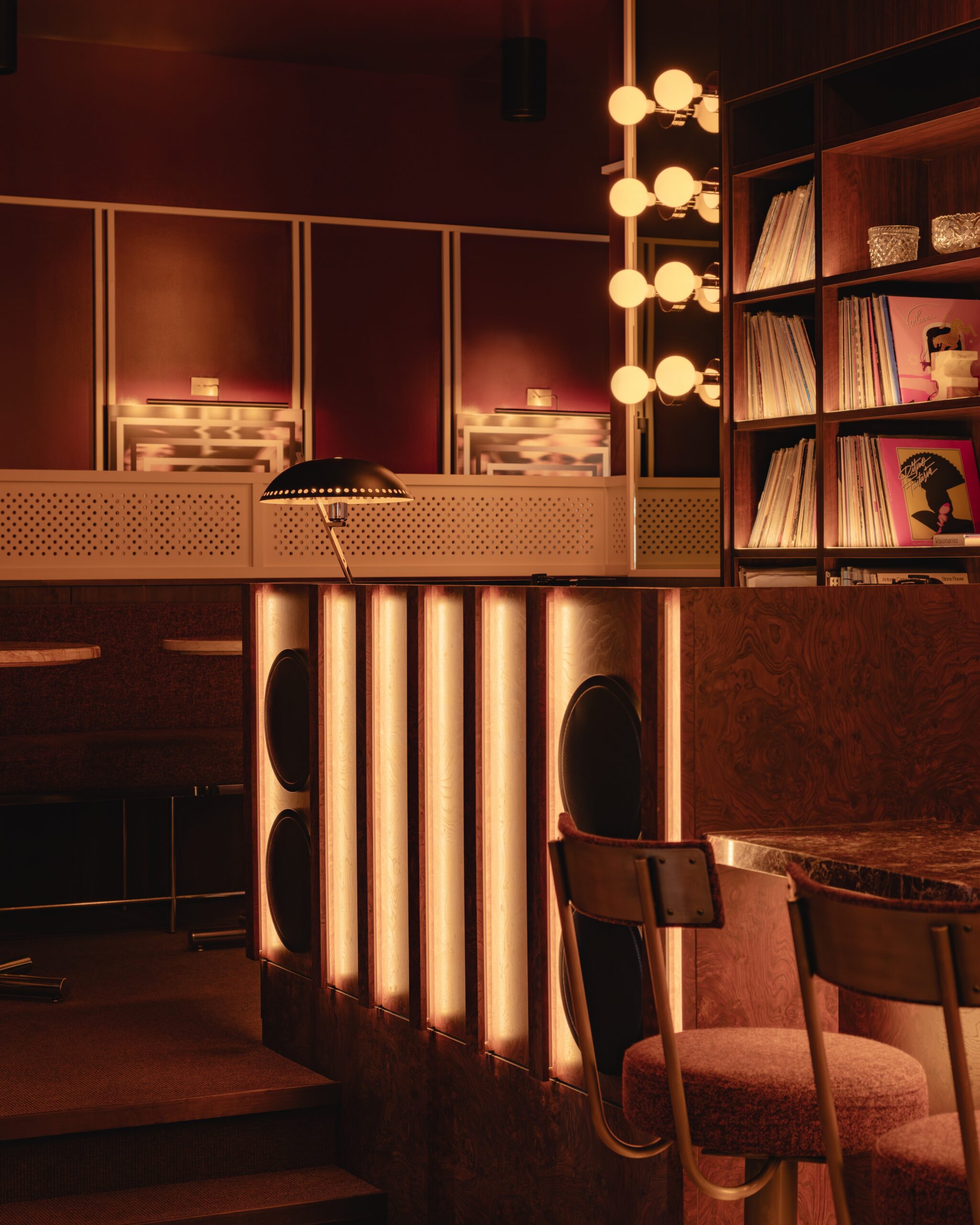
Mimi extends the sequence into the later hours emerging as a distinctive nocturnal experience. The design draws inspiration from the careless glamour of Milanese lounge culture and the ever-chic sciura, evoking the luxurious nonchalance of nights that unfold without haste. The palette combines deep browns, glossy reds, amber tones, Rosso Rubino marble, and chrome detailing while custom burnt orange velvet sofas, reminiscent of 1960s sunken lounges, and monolithic burled walnut panels line the space. The lighting program, anchored by a repetition of large capsule pendants, produces a consistent low glow across the space. Guests drift in late, sipping cocktails under the canopy of warm light, and settle into the rhythm of the room as night unfolds.
Challenge :
Light Quality: Balancing Materiality and Luminosity
Achieving the light level balance proved to be one of the projects' most intricate design challenges. Much like the effortless grace of silk scarf draped along the shoulder of an elegant woman at a cafe, the patterned textile demanded a lighting response rooted in milanesità.
This required a higher illumination to command attention to the pattern without flooding the space with light through the opaque lower lens. A balance important to maintaining the softer, more atmospheric lighting levels.
Through collaboration with VISO, Ste Marie Studio refined the technical and aesthetic dimensions of the pieces form and structure. The result was a seamless design where the fixtures' internal structure and material joints disappear entirely across all four sides.
The fabric itself became a study. Getting granular with the details of the scale, color saturation, and fabric type were all appropriate for the desired lighting levels. The pattern required exacting proportion: scaled too large, it would lose its delicate reference to classic motifs; too small, and its visual impact would dissolve. Equally critical was finding the ideal opacity. The fabric needed to be translucent enough to allow light to pass through and animate the space, yet substantial enough to preserve the richness of its color.